


Spray Foam vs. Fiberglass Insulation: What's the Difference?
Choosing the right insulation can make a noticeable difference in your home's comfort, energy use, and heating and cooling costs. If you're comparing spray foam vs. fiberglass insulation for your Rochester, NY home, understanding how these two options differ can help you decide which one makes sense for your needs.
What Is Spray Foam Insulation?
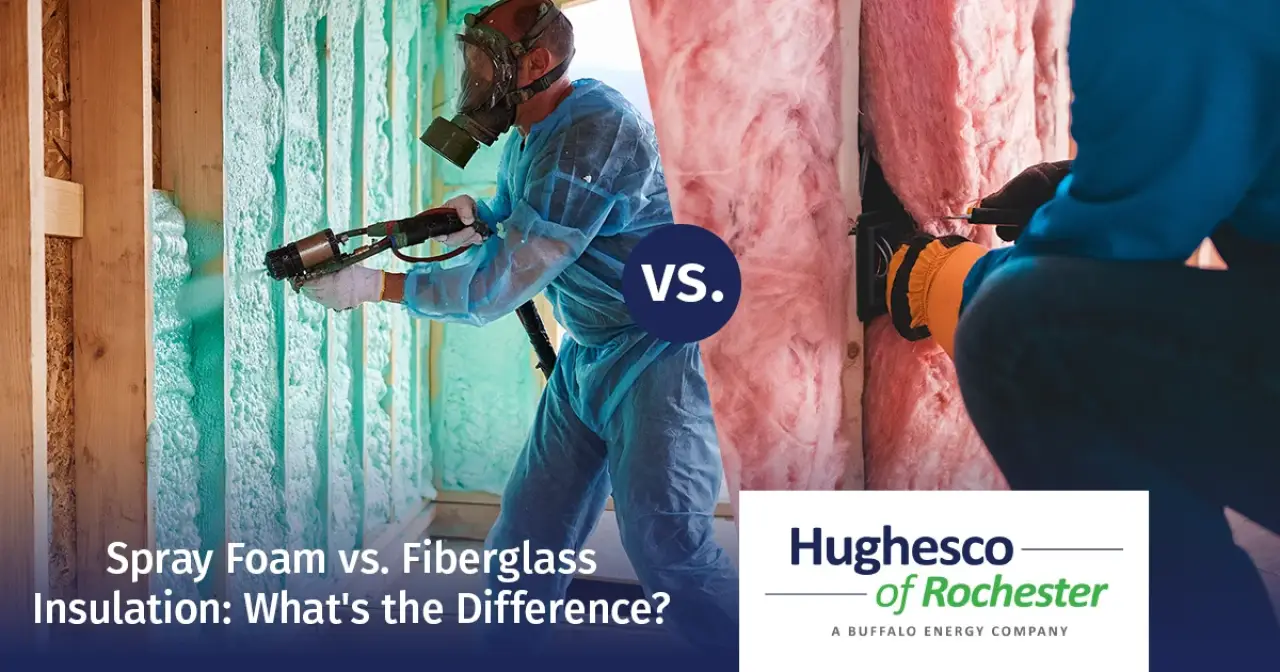
Spray foam insulation is a liquid insulation material that's sprayed onto surfaces where it expands and hardens to fill gaps, cracks, and other openings. It can create a tight air seal while providing insulation, which can help reduce drafts and unwanted heat transfer throughout your home.
Spray foam typically costs more upfront than fiberglass, but its air-sealing capabilities can make it a good choice for areas where controlling air movement is a priority.
What Is Fiberglass Insulation?
Fiberglass insulation is made from fine glass fibers and is commonly installed in rolls, batts, or loose-fill material. It's a popular insulation option because it's relatively affordable, widely available, and can be installed in areas such as attics, walls, floors, and ceilings.
Fiberglass doesn't provide the same level of air sealing as spray foam, but it can still provide effective thermal insulation when it's properly installed.
Key Differences Between Spray Foam Insulation vs. Fiberglass
When comparing spray foam insulation vs. fiberglass, consider how each material performs, how it's installed, and what your home needs.
- Air sealing: Spray foam expands to fill gaps and cracks, helping limit air leakage. Fiberglass primarily slows heat transfer and doesn't create the same type of air seal.
- Installation: Spray foam is applied directly to surfaces and expands as it cures. Fiberglass is typically installed as batts, rolls, or loose-fill insulation.
- Energy efficiency: Both types of insulation can improve energy efficiency, but spray foam can provide additional benefits by reducing air leakage around insulated areas.
- Moisture resistance: Certain types of spray foam can help limit moisture movement through insulated areas. Fiberglass can absorb moisture if it becomes wet, which may reduce its effectiveness.
- Cost: Spray foam insulation generally has a higher upfront installation cost than fiberglass. Fiberglass is often a more budget-friendly choice, making it a common option for larger areas.
- Durability: Properly installed spray foam can remain in place for many years without settling. Fiberglass can also have a long service life when it's correctly installed and kept dry.
- Where it's used: Spray foam can be especially useful around irregular spaces, small gaps, rim joists, and other areas that are difficult to insulate with traditional materials. Fiberglass works well in open wall cavities, attics, and other accessible spaces.
- Comfort: By reducing drafts and air leakage, spray foam may help create more consistent indoor temperatures. Fiberglass can also improve comfort by slowing heat transfer through your home's walls, attic, and other insulated areas.
Is Foam Insulation Better Than Fiberglass?
There's no single answer to whether foam insulation is better than fiberglass because the right choice depends on your home, budget, existing insulation, and the areas that need attention. When deciding between foam vs. fiberglass insulation, consider factors such as air leakage, the condition of your current insulation, the location of the project, and your long-term energy goals. A professional assessment can help identify where your home is losing energy and which insulation approach may be the best fit.
For homeowners in Rochester, NY and surrounding communities, our team can help you evaluate your home's insulation needs and determine which options are worth considering.
Improve Your Home's Comfort With the Right Insulation
Comparing spray foam insulation vs. fiberglass comes down to more than just upfront cost. Spray foam can provide insulation and air sealing in one application, while fiberglass offers an affordable and versatile way to improve thermal insulation throughout your home. If you're not sure which option is right for your Rochester, NY home, reach out to us to learn more about your choices.
Contact Hughesco of Rochester to inquire about a free home energy assessment and take the next step toward a more comfortable, energy-efficient home.